Posts

Rise of Indian Automobile Manufacturing

Image
India automobile manufacturing come through a tough patch of socialism and License Raj. When India gained independence, Hindustan Motors was the only Indian car maker in India. The Nehruvian Socialism had a pretty bad impact on Indian Automobile sector. In 1954, Ford & GM down their shutters due to License Raj. Things started to shape when Sanjay Gandhi planned to manufacture car in India. Maruti Udyog Limited was formed with JV along side Japanese automobile maker Suzuki. Maruti 800 was the first car that rolled out from the newly formed JV. This rose the Indian car sales to 1 lakh in 1985. This rose to 2 lakh in 1989. It take 15 years to increase the value 5 times when 10 lakh cars were sold in 2004. By 2010, 25 lakh cars were sold in India. 1991 was considered as a remarkable year for Indian economy when Indian economy is liberalized to the foreign investors. The first 3 foreign companies to come to India are - Ford, General Motors and Hyundai. In 1960, SIAM (Society of Indian A...

Strengthening the Indo-Japanese Relation to a new high

Image
Japan always stood as a "Special" friend to India. Cultural exchanges between India and Japan date back to the 6th century with the introduction of Buddhism to Japan from India, via China and Korea. Indian monk Bodhisena went over to Japan in 736AD to spread Buddhism. During World War 2, Japan helped Netaji Subhash Chandra Bose to form "Azad Hind Fauj" (Indian National Army). Later, Mr. Radhabinod Pal was appointed as one of three Asian judges appointed to the International Military Tribunal for the Far East, the "Tokyo Trials". Among all the judges of the tribunal, he was the only one who submitted a judgment which insisted all defendants were not guilty. India-Japan diplomatic relation was established in 1952. Back in 80s and 90s when India opened up for foreign companies, Japanese conglomerates specially the high tech automotive companies opened JV in India. Among them Hero Honda, Kawasaki Bajaj, Hyderabad Allwyn-Nissan, TVS-Suzuki, Mitsubishi-Hindustan...

Should Indians hold their obsession with Pakistan?

Image
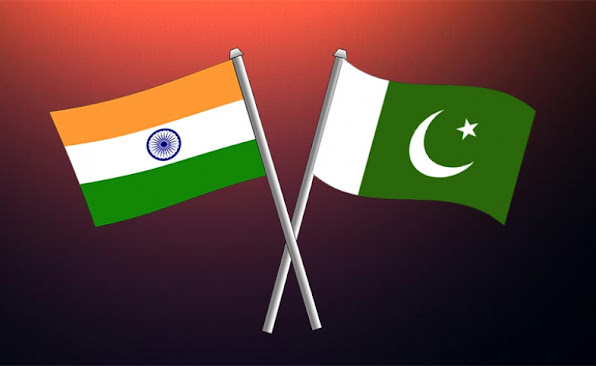
Indians are always very much obsessed with Pakistan and vice versa. Every time people from both country are comparing with each other.  Let's see where India and Pakistan stands today. 1. Population (Dec 2020) India - 1.387 billion Pakistan - 223.02 million India is roughly 6.2 times bigger than Pakistan. 2. GDP PPP (2019, World Bank) India - $ 9.612 trillion Pakistan - $1.058 trillion India is roughly 9 times bigger than Pakistan. 3. GDP per capita (UNCTAD data) India - $2239 Pakistan - $1193 4. Military Expenditure (SIPRI Report) India - $71.1 billion (2.4% of GDP) Pakistan - $10.3 billion (3.9% of GDP) 5. Forex Reserve held by Central bank(11 Dec 2020) India - $ 578.57 billion Pakistan - $ 13.3 billion India is roughly 45 times bigger than Pakistan.  6. Merchandise Export (2019) India - $ 322 billion Pakistan - $ 20.8 billion India is roughly 15 times bigger than Pakistan. 7. Services Export (2019) India - $214.36 billion Pakistan - $ 5.78 billion India is roughly 37 times ...

India's Aviation Sector

Image
India's air passenger traffic stood at 341.05 million in FY20, a CAGR of 11.13% from FY16 - 20. Domestic passenger stood at 274.50 million. The freight traffic grew at a CAGR at 5.32% during FY16-20 from 2.70 MT (million tonnes) to 3.33 MT. The top Indian airports based on Air passenger Traffic in FY20 are - 1. Indira Gandhi International Airport, New Delhi (DEL) - 67.30 million 2. Chhatrapati Shivaji Maharaj International Airport, Mumbai (BOM) - 45.87 million 3. Kempegowda International Airport, Bengaluru (BLR) - 32.36 million 4. Chennai International Airport, Chennai (MAA) - 22.27 million 5. Netaji Subhas Chandra Bose International Airport, Kolkata (CCU) - 22.01 million 6. Rajiv Gandhi International Airport, Hyderabad (HYD) - 21.65 million Among top 50 busiest airports, USA has 15, China has 9 and India has just 2 (New Delhi and Mumbai). USA's Hartsfield–Jackson Atlanta International Airport is World's busiest with 110.53 million passengers in FY20. ...

India's increasing energy needs

Image
India's proven reserve is around 4.73 billion barrels (0.3% of the World). This reserve can only sustain 2.9 years based on India's current consumption. India's current crude oil production is 1.01 million barrels per day (7.8% of proven reserves). In FY20, India's crude oil production was 30.5 MMT. This means India's 96% of petroleum needs are mitigated through imports. India's refining capacity is 249.37 MMTPA (million metric tonnes per annum) of crude oil. This has increased 4 times compared to 62 MMTPA in 1998. Reliance's Jamnagar Refinery has current capacity of 35.2 MMTPA, which is largest in the World. The top nations in terms of oil refining capacity (million barrels per day) are- India consumes 4.44 million barrels per day as of 2016. So the excess oil India exports to other nations. Refined oil is India's largest export. But to protect India's energy security, strategic reserves were planned. To manage the strategic reserves, ISPRL (Indian ...

How big is India's biggest companies?

In Fortune Global 500 list of 2020, only 7 Indian companies made it to the list. This list featured all public listed companies. The 500th company to made it to the list is Shanxi Jincheng Anthracite Coal Mining Ltd. with a revenue of $25.3 billion. The biggest company from India is Reliance Industries Limited with total revenue of ₹615854 crore or $ 86.26 billion. This means India has no company with revenue over 100 billion USD. The countries with companies having revenue more than $100 billion are - USA (32 companies) China (16 companies) Japan (6 companies) France (3 companies) Netherlands and Russia (2 companies) Italy, UK, Saudi Arabia, Singapore, South Korea, Switzerland and Taiwan (1 company) This means India has only 7 companies with revenue more than $25 billion. There is also Fortune India 500 list featuring India's top 500 publicly listed companies. Some of the remarkable companies are - 1. Reliance Industries Limited (₹615854 crore, $ 86.26 billion) 28. HCL Technologie...

Was India performed better economically under PM Manmohan Singh?

Image
Well, under PV Narasimha Rao when LPG (Liberalization, Privatization and Globalization) reform was introduced in 1991, India faced so many problems economically. Our Forex reserve was all time low. So a new change would not impact much initially. But it helped India in long run to eradicate poverty. So under Rao’s first year India’s GDP just grew 1.1%. Under his 5 year tenure the GDP grew at 5.1% rate. The economic policies are little bit stable when A.B. Vajpayee took office and India’s GDP grew 5.9% over his 6 year tenure. When Manmohan Singh took office he delivered 7.7% growth over ten years. During Singh’s tenure he faced the financial crisis of 2008 that damaging  financial  institutions globally, culminating with the bankruptcy of Lehman Brothers on September 15,  2008 , and an international banking  crisis . There was no planned lockdown due to any virus outbreak but the financial crisis impacted Indian stock market and forex reserve. BSE Sensex was 2020...